Saharanpur First-Time Pregnancy Guide: 5 Things That Can Shape Your Baby's Life
A simple first-trimester guide for first-time mothers in Saharanpur covering early symptoms, 5 important precautions, daily dos and don'ts, and how to choose the right hospital for pregnancy care and delivery.
Finding out you are pregnant is one of the most exciting moments in a family's life, especially if this is your first pregnancy. For many women in Saharanpur and nearby districts, the first trimester brings a mix of joy, questions, and sometimes worry. This guide explains what happens in the first 12 weeks, which symptoms are normal, and the simple steps that can make a real difference to your baby's health.
What Is the First Trimester?
The first trimester starts on the first day of your last menstrual period (LMP) and runs until the end of week 12 or 13. Doctors count the first two weeks toward your pregnancy even though conception has not happened yet. By about 3 months, your baby has grown from a tiny cell into a fully formed fetus about the size of a small plum.
How Your Baby Develops
Weeks 1 to 4: The fertilised egg attaches to the uterine lining, and the neural tube, which becomes the brain and spinal cord, begins to form.
Weeks 5 to 8: The heart starts beating, tiny limb buds appear, and the main facial features and organs begin to form.
Weeks 9 to 12: Bones start to harden, fingernails appear, and the baby begins to move, although you will not feel it yet.
Common First Trimester Symptoms and How to Manage Them
Hormones such as hCG, progesterone, and estrogen cause many of the early changes you may notice. Here are the most common ones and simple ways to handle them.
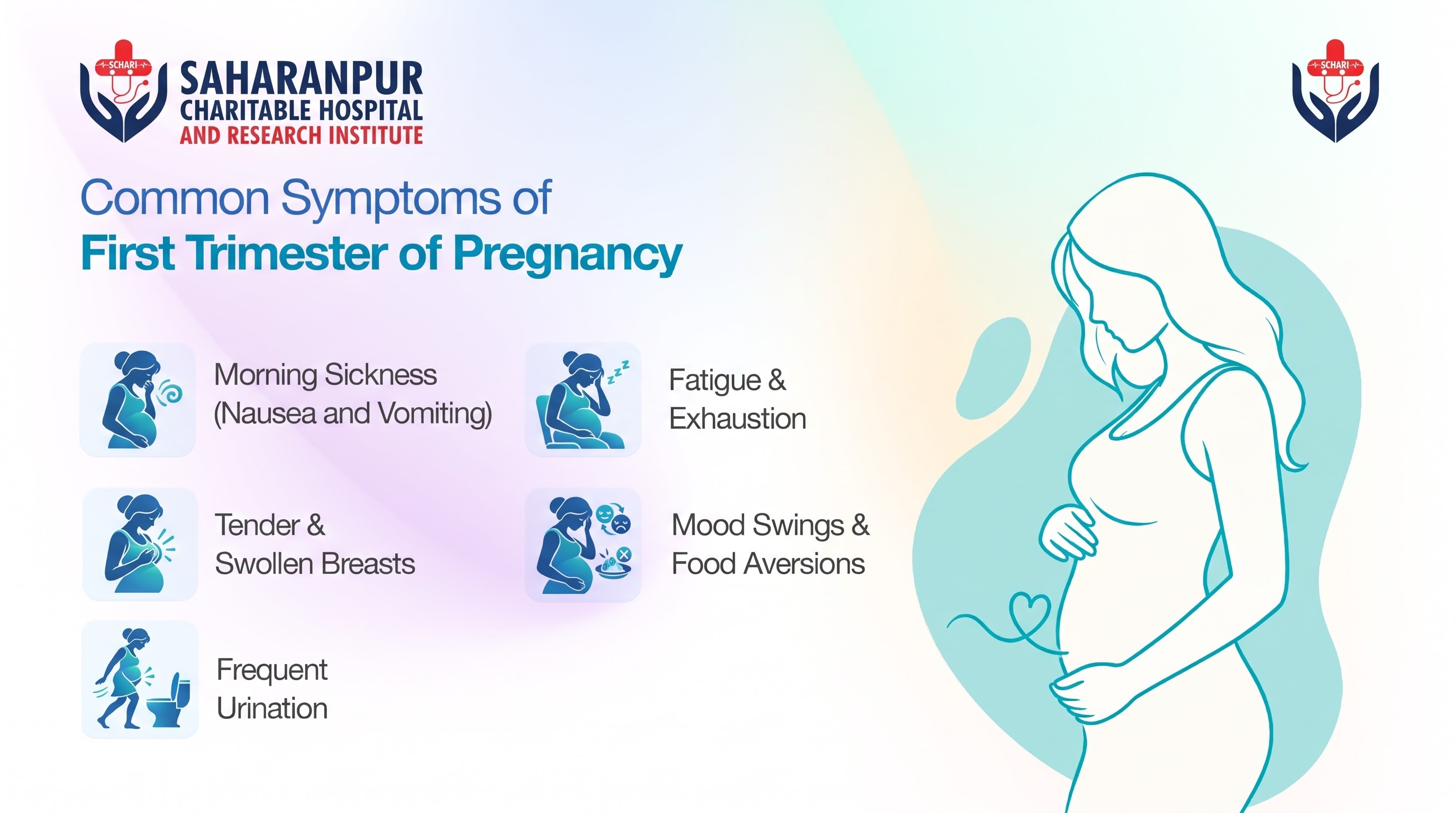
1. Morning Sickness (Nausea)
Nausea can occur at any time of day and often peaks between weeks 6 and 9. Eat small, frequent meals with complex carbohydrates and lean protein, keep dry crackers beside your bed to eat before getting up, and try ginger tea or ginger candies. Vitamin B6 can help, but only take it after speaking with your doctor.
2. Extreme Tiredness
Your body is building the placenta, which takes a lot of energy, and progesterone can make you feel drained. Go to bed earlier, rest during the day when you can, and keep up gentle activity like short walks, which can improve your energy.
3. Breast Tenderness
Your breasts may feel heavy, sore, or tingly as your milk ducts begin to develop. A soft, well-fitting, breathable cotton bra without underwire is usually more comfortable.
4. Frequent Urination
Your growing uterus presses on your bladder, and blood flow to the kidneys increases. Drink plenty of water during the day, but reduce fluids an hour or two before bed. Do not hold in urine, because this raises the risk of urinary tract infections.
5. Mood Changes and Food Cravings or Aversions
Hormonal shifts can cause sudden mood swings, and you may suddenly dislike foods you used to enjoy. Be patient with yourself, talk openly with your family, and eat the healthy foods you can manage.
5 Important Precautions to Protect Your Pregnancy
Most early miscarriages are caused by chromosomal problems that cannot be prevented. Still, you can reduce other risks and give your baby the best start with these five steps.
Start prenatal vitamins early: Take a daily prenatal vitamin with folic acid and iron, as recommended by your doctor. Folic acid is especially important for the baby's brain and spine in the first weeks.
Book your first prenatal visit soon: As soon as a home test is positive, visit a gynaecologist to confirm the pregnancy, rule out an ectopic pregnancy, and review your medical history.
Control existing health conditions: If you have diabetes, thyroid disease, or high blood pressure, keep it well managed with your doctor before and during pregnancy.
Avoid infections: Wash your hands often, eat only well-cooked meat and eggs, and avoid raw or unpasteurised foods.
Get medical help for warning signs: Contact your doctor right away if you have severe abdominal pain, heavy bleeding, fluid leaking from the vagina, or a high fever.
Daily Dos and Don'ts of Pregnancy
Pregnancy can feel overwhelming, especially in the early weeks. Use this table as a simple daily reference.
Category | Do's (Recommended) | Don'ts (Avoid) |
|---|---|---|
Nutrition and Hydration | Eat balanced, nutrient-rich meals | Eat raw or undercooked meat, seafood, or eggs |
Lifestyle and Habits | Sleep 7 to 9 hours a night | Smoke, vape, or use recreational drugs |
Medication and Medical Care | Check with your doctor before taking any medicine | Take medicines, including painkillers, without medical advice |
Household Safety | Use gloves and ventilate the area when cleaning | Use toxic household chemicals or strong pesticides without protection |
Things to Avoid in Early Pregnancy
Alcohol, Smoking, and Drugs
No amount of alcohol is known to be safe during pregnancy. Alcohol crosses the placenta and can cause fetal alcohol spectrum disorders. Smoking and nicotine reduce oxygen supply to the baby and raise the risk of low birth weight, preterm birth, and pregnancy loss.
High Caffeine Intake
Too much caffeine has been linked to miscarriage and low birth weight. Keep caffeine under about 200 mg a day, which is roughly one cup of coffee.
Risky Foods
Avoid unpasteurised milk, cheese, and juice, raw sushi, and undercooked meat. These can carry infections that are harmful during pregnancy.
Overheating
A high body temperature in the first trimester, above about 102 degrees Fahrenheit (38.9 degrees Celsius), can increase the risk of neural tube defects. Avoid strenuous exercise in extreme heat, stay cool, and treat fever promptly with medical advice.
Certain Medicines and Skincare Products
Some over-the-counter and prescription medicines can harm the baby. Do not take NSAIDs such as ibuprofen unless your doctor advises it. In skincare, avoid oral and topical retinoids, including retinol and Retin-A, and avoid high-dose salicylic acid. Show your doctor every medicine and cream you use.
How to Choose the Right Hospital for Pregnancy and Delivery in Saharanpur
Rather than relying on rankings alone, choose a hospital that matches your needs. When you visit or call, ask about the following:
Qualified obstetricians and gynaecologists available for regular checkups
24-hour delivery and emergency obstetric services
A Neonatal Intensive Care Unit (NICU) for newborns who need extra care
Blood bank access and facilities for emergency caesarean sections
Anaesthesia services available round the clock
Clear, transparent pricing and information about covered government schemes
Frequently Asked Questions for Saharanpur Mothers
What is the best hospital for delivery in Saharanpur?
The best hospital depends on your health, your pregnancy risk level, and what you need. Use the checklist above to compare options. You can also talk to your gynaecologist, who knows your medical history and can recommend a facility that suits you. Our team at Saharanpur Charitable Hospital & Research Institute is happy to explain our delivery services and what to expect.
Which hospital is good for pregnancy checkups in Saharanpur?
Look for a place with regular obstetric clinics, ultrasound and blood test facilities, and a doctor who explains each step. Your first visit should happen as soon as you know you are pregnant. For pregnancy consultations, contact Saharanpur Charitable Hospital & Research Institute at 8928872030 to enquire about appointments.
Can I get financial help for delivery in government hospitals?
Yes, eligible women may get help through schemes such as Janani Suraksha Yojana and the Pradhan Mantri Surakshit Matritva Abhiyan (PMSMA). Ayushman Bharat PM-JAY may also cover some hospital costs for eligible families. Eligibility rules can change, so check the official websites or ask your doctor or local health office before your visit.
When should I get my first ultrasound?
Most doctors schedule the first ultrasound between weeks 6 and 12. It confirms the pregnancy, checks the baby's heartbeat, and estimates the due date.
Conclusion
The first trimester sets the foundation for your baby's growth. Mild cramping, breast tenderness, and tiredness are common and usually normal. Regular checkups, good nutrition, and avoiding harmful substances make a real difference. If you are a first-time mother in Saharanpur, do not hesitate to ask questions. Your doctor is your best guide, and every pregnancy is different.
If you have heavy bleeding, severe pain, or fluid leaking, go to the nearest emergency facility right away.
Medical disclaimer: This article is for general information only and does not replace advice from a qualified doctor. Please consult your gynaecologist about your individual health needs.